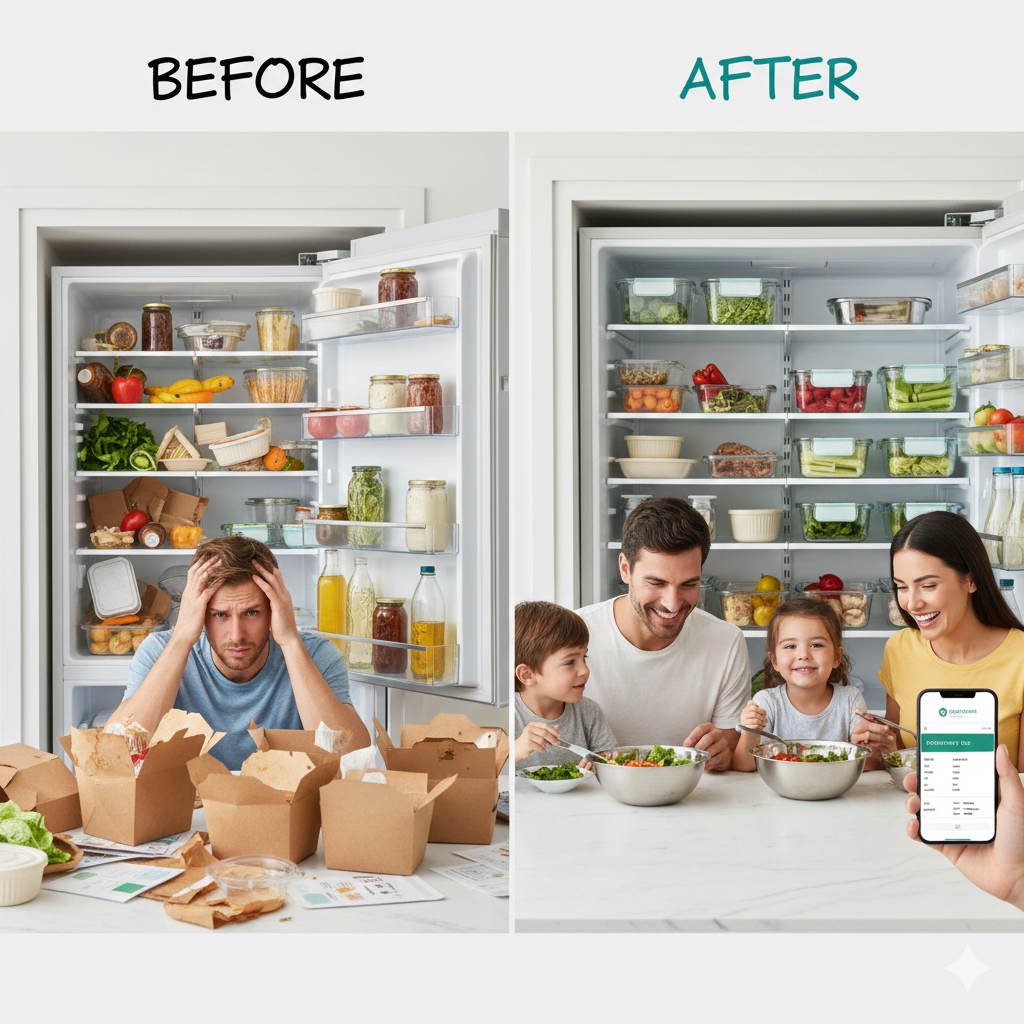
Do you find yourself constantly leaning on takeout, or do you want to start cooking more at home? There are many compelling reasons to trade the restaurant menu for your own kitchen, including:
- Saving Money: The average cost of a meal out is roughly $13.00, whereas the average cost of a meal prepared at home is approximately $4.00. Over a single week, that’s a savings of nearly $63.00 per person.
- Eating Healthier Foods: Home-cooked meals typically contain significantly less sodium, saturated fat, and hidden sugars than restaurant or processed foods.
- Avoiding Allergies and Preferences: When you are the chef, you have 100% control. No more worrying about cross-contamination or "picking out" ingredients you don't like.
The Secret is in the "Sweet Spot"
If you’ve decided to cook at home, the next question is: do you shop every night, "wing it," or plan for the whole week? I have experimented with every method—shopping daily, weekly, and even bi-weekly.
It turns out the "sweet spot" for ingredient freshness and budget management is shopping on Sunday (or your last day off) and buying for a single week. Shopping daily leads to impulse buys, while shopping bi-weekly often results in wilted produce.
The Power of the Seven-Day Plan
Buying all of your food for a whole week will:
- Save Time: You trade five to seven stressful trips to the store for one organized visit.
- Save Money: You buy in bulk where it makes sense and avoid the "convenience tax" of last-minute shopping.
- Avoid Waste: When every ingredient has a "destination" in a recipe, you’ll stop finding science experiments in the back of your fridge.
And I can tell you from experience—there is no better feeling than having used all of the ingredients you planned for by the end of the week and seeing your fridge nearly empty! No wasted ingredients and leftovers all gone.
How SmartMenuPlanner.com Simplifies Your Life
Planning is the goal, but execution is the hard part. That’s where SmartMenuPlanner.com comes in. My website makes your shopping easier by allowing you to:
- Assign ingredients to specific stores, so your list is organized by your actual walking route.
- Aggregate ingredients across recipes, meaning if three recipes call for half an onion, the planner tells you exactly how many onions to buy in total.
- Export digital checklists that you can access on your phone, ensuring you never get home and realize you forgot the one thing you actually went in for.
So stop asking "what's for dinner?" and start enjoying your evenings again. Your wallet, your health, and your future self will thank you.